Thinking about selling a high-end home in Farmington and wondering what it will take to secure a strong result? You want clear, local insight and a plan that protects your time and your bottom line. In this snapshot, you’ll learn how the Farmington luxury segment behaves, what serious buyers prioritize today, and the exact steps to launch with confidence. Let’s dive in.
What counts as luxury in Farmington
In Farmington, the townwide median value sits in the low-to-mid $400Ks, and typical homes have been closing near asking with a median market time of roughly 4 to 6 weeks. That is helpful context, but luxury performs differently. Industry practice defines luxury relative to the local market, often the top 10 percent of recent sales, and sometimes the top 5 percent for an entry-level luxury band. For a precise number in Farmington, request an MLS report that shows the 90th and 95th percentile cutoffs for the past 6 to 12 months. You can also review how professionals define it in this overview of how to define luxury in today’s market.
Farmington does see $1M-plus and occasional multi-million sales, but volumes at those prices are limited. That means you should expect more tailored marketing and a longer runway than the mainstream market.
Market snapshot for sellers
- Town context: Typical Farmington homes have been closing close to list price with market times measured in weeks, not months.
- Luxury reality: At the top of the market, inventory tends to sit longer and negotiations can be wider than the mid-market. This is a consistent pattern seen in luxury research nationally and is relevant for Farmington’s upper tiers.
What this means for pricing and timing
- Anchor to recent MLS comps for your micro-market, not town medians. Ask your agent for the last 6 to 12 months of luxury-band closings and the 90th and 95th percentile cutoffs.
- Plan for more days on market than the town median. Strong presentation can shorten that window, but set expectations accordingly.
- Monitor week-one engagement closely. If qualified traffic is soft, adjust presentation or price quickly rather than let the listing age.
Who is buying Farmington luxury now
- Local and regional professionals value proximity to major employers. Access to UConn Health is a consistent demand driver for the area. See the local context from UConn Health.
- Established neighborhoods with scale and amenities, like Devonwood, attract buyers who prioritize lot size and a cohesive community setting. Explore the Devonwood neighborhood overview for reference.
- Expect a mix of local move-up buyers and out-of-area transferees. Out-of-area buyers rely heavily on media before touring in person, which increases the value of premium photography, video, and 3D tours.
What luxury buyers prioritize
- Dedicated workspace and flexible rooms for hybrid or remote work.
- Turnkey condition, high-quality finishes, and low-maintenance outdoor spaces.
- Strong indoor-outdoor flow, natural light, and well-presented entertaining areas.
Presentation that moves the needle
Well-executed preparation changes both speed and negotiation leverage in the luxury band.
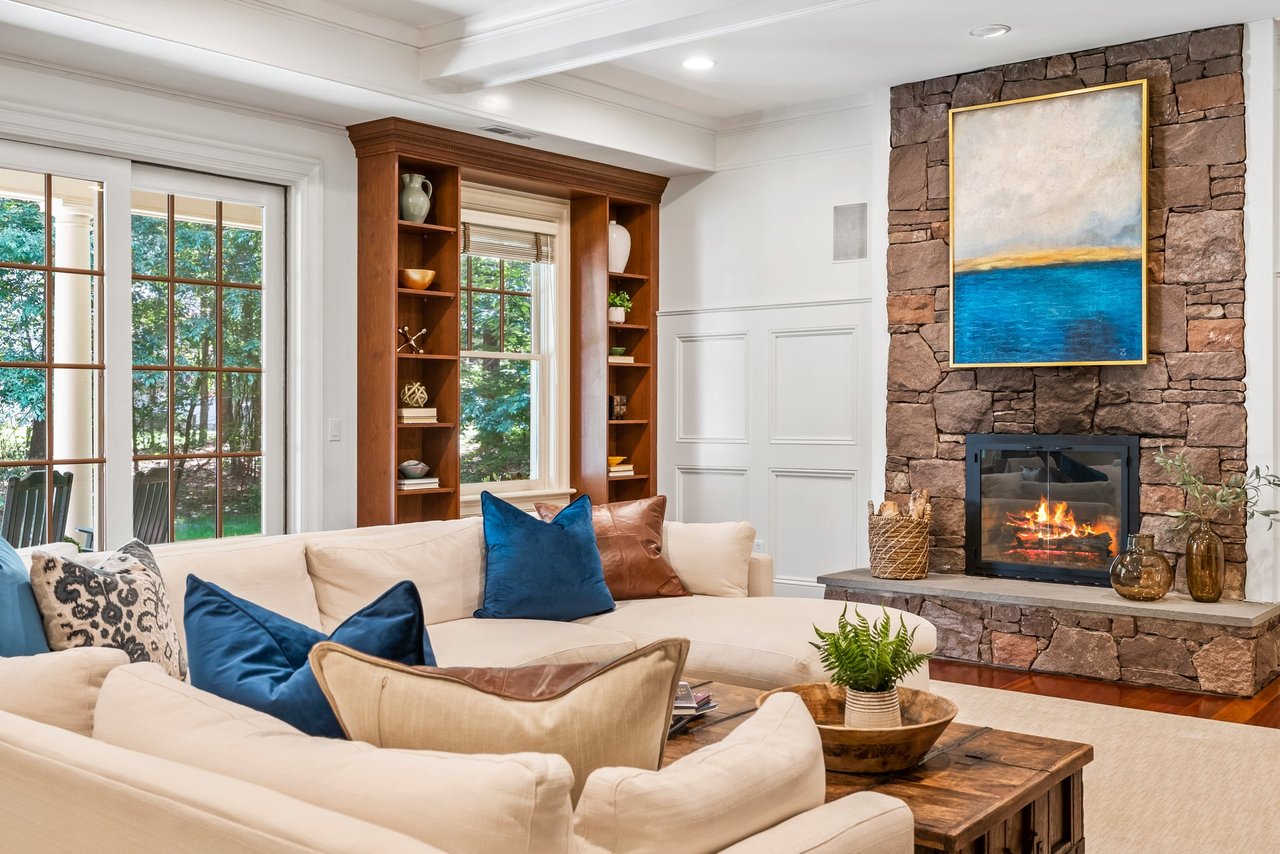
- Staging impact: In a national survey, 29 percent of agents reported staging produced a 1 to 10 percent increase in offer price, and 49 percent saw staging reduce time on market. Review the findings in NAR’s 2025 Profile of Home Staging. Industry reporting from RESA also shows above-median ROI for staging in higher price bands. See the RESA statistics for context.
- Visual media: High-quality photography, twilight shots, drone imagery, and 3D tours consistently increase online engagement and can shorten time on market. Vendor studies cite faster sale rates when interactive 3D tours are used. Explore a summary of virtual tour statistics.
- Typical budgets: Nationally, median staging spend is about $1,500, though occupied luxury homes often justify several thousand to $10K–$25K depending on scope. Professional photo packages vary by add-ons and can range from a few hundred to a couple thousand dollars. See a breakdown of photography package value. Consider a modest pre-list inspection to reduce renegotiation risk; budgets often start in the low hundreds. Here is a practical take on pre-list prep and timing.
Your 4 to 8 week pre-list plan
Below is a simple, evidence-based timeline. Adjust for your home’s scope of work.
4 to 8 weeks before launch
- Order a data-driven CMA with 6 to 12 months of luxury comps, including the 90th and 95th percentile price cutoffs from MLS.
- Schedule a pre-list inspection. Use the report to target repairs that affect showability, appraisal risk, and buyer confidence.
- Engage a professional stager and photographer. Book dates so photography and 3D scans follow staging.
2 to 3 weeks before launch
- Declutter, deep clean, depersonalize, and complete priority repairs. Refresh landscaping and curb appeal.
- Assemble a binder with permits, invoices, warranties, and upgrade notes to share with buyer agents.
7 to 10 days before launch
- Complete staging. Capture daytime HDR images, twilight exteriors, drone shots, a 3D tour, floor plan, and a short cinematic video.
- Prepare all media for a coordinated MLS and portal release on list day.
Launch week
- Host a broker preview for agents who actively work the Farmington and Hartford-area luxury segment.
- Run targeted digital outreach to reach out-of-area buyers. Track showings, online views, saves, and inquiry quality daily.
- If engagement is below target in the first week, adjust swiftly.
Negotiation and contract in the upper tier
- Vet buyer strength. Prioritize clear proof of funds for cash or strong pre-approval letters.
- Clarify appraisal strategy early. Consider how you will approach potential appraisal gaps.
- Set realistic inspection windows. A clean inspection story, supported by your pre-list work, helps protect timelines and terms.
Farmington and Devonwood seller notes
- Devonwood details: The community features established single-family homes within a wooded setting and a convenient location about 12 miles from Hartford. Learn more on the Devonwood site. When marketing, highlight lot attributes, neighborhood setting, and lifestyle conveniences.
- Schools: Many buyers review public information about schools as part of their decision-making. If applicable to your home’s location, provide neutral, factual resources like the Farmington High School profile.
- Local demand drivers: Proximity to regional employers and amenities helps explain why Farmington supports $1M-plus transactions even with a median below $500K.
Ready to sell with confidence?
You deserve a calm, well-orchestrated process that maximizes your outcome. Christy Muller is a service-first advisor who has lived in Farmington for decades, with a specialty in Devonwood and high-end presentation. Her track record includes recognized production awards and a marketing approach that blends strategic pricing, elevated staging, and premium media. If you are considering a sale, schedule a free consultation with Christy Muller to get a tailored plan and a clear timeline.
FAQs
What defines a luxury home in Farmington?
- Luxury is typically the top 10 percent of recent local sales by price; ask for an MLS report that shows the 90th and 95th percentile cutoffs for the last 6 to 12 months.
How long do luxury homes take to sell in Farmington?
- Townwide homes have been selling in roughly 4 to 6 weeks, but upper-tier listings often take longer; strong staging and media can shorten that window.
What prep investments have the best ROI for high-end listings?
- Staging and premium photography consistently deliver returns; NAR reports staging can increase offers and cut days on market, and interactive media boosts engagement.
How should I market to out-of-area luxury buyers?
- Use top-tier photography, 3D tours, floor plans, and a short cinematic video, then pair them with targeted digital outreach and a coordinated MLS launch.
How should pricing strategy differ above $1M?
- Rely on luxury-band comps and MLS percentiles rather than town medians; monitor week-one interest and be ready to adjust presentation or price.
Should I stage a lived-in home?
- Yes, especially at the top of the market; focus on the living room, kitchen, and primary suite to help buyers visualize and to support stronger offers.